LFPシフトはブームか、再編の始まりか
米欧でEV成長率が鈍化する今こそ、LFP採用拡大を“安さ”だけでなく、工場立地と政策適合から見る必要がある
EV減速局面でもLFPの話題が消えない理由
米欧などでEV販売の成長率鈍化が語られる局面でも、LFP(リン酸鉄リチウム)への関心は消えていない。ここにあるのは単純な技術トレンドではなく、需要が伸び悩む時期ほど採算の悪い構造が先に露出するという産業の現実である。
高価格帯だけでは販売を広げにくくなった今、自動車メーカーは、どの顧客層に、どの価格で、どの利益率を残して売るかを改めて問い直している。LFPはその文脈で、値下げのための部材というより、利益率を守りながら普及価格帯を成立させるための選択肢として見られている。
足元の市場環境を見ると、米国や欧州ではEV需要の伸び鈍化や各社の戦略見直しが論点になっている。焦点は成長率の鈍化にあるが、その裏では電池コストの再設計が進んでいる。
https://www.reuters.com
この流れは、EV普及が止まったことを意味しない。むしろ、どんなEVでも伸びる時期が終わり、採算の合うEVだけが残る時期に入ったと見るほうが正確だ。
LFPが注目されるのは、単に安いからではない。選別局面で利益を守りやすい設計だからであり、その優位は価格だけでなく、どこで作り、どの制度に適合し、どんな供給契約で組むかによって大きく変わる。
Tesla・LG Energy Solution・Fordに共通するLFP戦略
Tesla、LG Energy Solution、Fordの動きを一つの線でつなぐと、共通点は明快だ。彼らはLFPを、廉価版の妥協ではなく、商品ポートフォリオを組み替えるための基盤として見ている。
高ニッケル系電池が必要な車種と、LFPで十分に成立する車種を分けることで、価格帯と利益率の設計を細かく調整できるからだ。ここで問われているのは、電池の優劣そのものより、どの電池をどの車種に載せるかという設計思想である。
Teslaはすでに一部車両でLFP採用を進めてきた。公式マニュアルでもLFP搭載車の存在が明示されており、同社サイトではネバダで電池関連生産を拡張する方針も示されている。
https://www.tesla.com/ownersmanual/2017_2023_model3/de_us/GUID-E414862C-CFA1-4A0B-9548-BE21C32CAA58.html
https://www.tesla.com/fr_ca/giga-nevada
LG Energy SolutionやFordにとっても事情は近い。重要なのは、LFPを導入した瞬間に競争力が手に入るわけではないという点だ。
セルを作る場所、調達網、補助金の対象条件、車種ごとの価格戦略、さらに供給契約の組み方まで一体で設計できる企業だけが、LFPの恩恵を利益に変えやすい。ここでは化学組成より、事業設計のほうが重い。
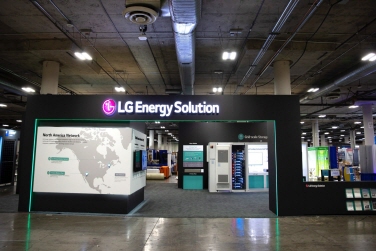
LG Energy Solutionは北米でESS向けLFP生産や現地供給網の強化を打ち出している。一方、FordはEV向けLFP導入を別の文脈で進めており、立地と市場を意識した布陣を進めている。
工場立地と北米製造拠点が利益率を左右する理由
LFPの収益性を左右する最大の論点は、電池そのものの製造原価だけではない。工場がどこにあるかで、物流費、関税負担、納期、在庫効率、そして政策インセンティブの取り込み方が大きく変わる。
重く、危険物としての取り扱いも伴う電池は、輸送距離が長くなるほど不利が増えやすい。安いセルを遠くから運ぶより、市場に近い場所で組み立てるほうが、最終的な採算では優位になりやすい。
北米市場を狙うなら、北米で組み立てる意味は以前よりはるかに大きい。米国のIRAでは、消費者向けの30D税額控除を含め、最終組立地に加えて、電池部材や重要鉱物の調達条件も優遇設計に関わるためだ。
制度の細部は米国財務省のガイダンスに整理されているが、全体像をつかむうえでは政策報道も役に立つ。工場立地は不動産の話ではなく、補助金、原産地ルール、供給網設計を束ねる経営判断になっている。
Treasury Releases Proposed Guidance to Continue U.S. Manufacturing Boom in Batteries and Clean Vehicles, Strengthen Energy Security | U.S. Department of the TreasuryWASHINGTON – Today the U.S. Department of the Treasury and Internal Revenue Service (IRS) released proposed guidance on the clean vehicle provisions of the Inflation Reduction Act (IRA) that are lowering costs for consumers, spurring a boom in U.S. manufacturing, and strengthening energy security by building resilient supply chains with allies and partners. Since the IRA was enacted, nearly $100 billion in private-sector investment has been announced across the U.S. clean vehicle and battery supply chain.“The Inflation Reduction Act has unleashed an investment and manufacturing boom in the United States, and since President Biden enacted the law, ecosystems have developed in communities nationwide to onshore the clean vehicle supply chain,” said Secretary of the Treasury Janet L. Yellen. “The Inflation Reduction Act’s clean vehicle tax credit saves consumers up to $7,500 on a new clean vehicle and hundreds of dollars per year on gas, while creating American manufacturing jobs and strengthening our energy security.”“President Biden entered office determined to reverse the decades-long trend of letting jobs and factories go overseas to China,” said John Podesta, Senior Advisor to the President for Clean Energy Innovation and Implementation. “Thanks to the Investing in America agenda and today’s important guidance from Treasury and the Department of Energy, we’re helping ensure that the electric vehicle future will be made in America.”Today’s Notice of Proposed Rulemaking (NRPM) provides clarity and certainty around the IRA’s foreign entity of concern (FEOC) requirements. To strengthen the security of America’s supply chains, beginning in 2024, an eligible clean vehicle may not contain any battery components that are manufactured or assembled by a FEOC, and, beginning in 2025, an eligible clean vehicle may not contain any critical minerals that were extracted, processed, or recycled by a FEOC. In conjunction with today’s Treasury NPRM, the Department of Energy has released proposed guidance defining what entities are a FEOC.In addition to the FEOC requirement, clean vehicles must also continue to meet additional statutory criteria, including additional sourcing requirements for both the critical minerals and battery components contained in the vehicle, a requirement that vehicles undergo final assembly in North America, and a requirement that vehicles do not exceed a Manufacturers Suggested Retail Price of $80,000 for a van, pickup truck, or sport utility vehicle, or $55,000 for any other vehicle. Foreign Entity of Concern RequirementThe NPRM provides proposed rules to determine whether applicable critical minerals (and their associated constituent materials) and battery components are manufactured or assembled by a FEOC for battery components, and extracted, processed, or recycled by a FEOC for critical minerals. The proposed rules would require manufacturers to conduct due diligence that complies with industry standards of tracing for battery materials.Under the proposal, FEOC-compliance for battery components would be determined at the time of manufacture or assembly, and FEOC-compliance for critical minerals would be determined by reviewing all phases of applicable critical mineral extraction, processing, and recycling. For example, a mineral extracted by an entity that is not a FEOC but processed by an entity that is a FEOC would not be compliant. Compliant battery components would have to be tracked to FEOC-compliant battery cells, and cells could not be manufactured or assembled by a FEOC.Critical minerals generally also must be traced. However, given that there is commingling in the critical mineral supply chains and suppliers may not be able to physically track certain specific masses of minerals to specific battery cells or batteries, the NPRM asks for comments on a temporary transition rule, under which critical minerals and associated constituent materials may be allocated to a particular set of battery cells. The battery cells would then have to be physically tracked to batteries and new clean vehicles using a serial number or other identification system.The NPRM also asks for comment on a proposed additional transition rule as the automotive industry develops the ability to trace certain low-value materials with precision. The NPRM proposes a temporary transition rule through 2026 that would give the industry time to develop tracing standards for these low-value materials. The guidance asks for comment on the need for and design of such a rule, what materials should be included under this approach, and whether alternative approaches to such a transition rule would be more appropriate.To allow compliant vehicles already on dealer lots and currently being manufactured to qualify for the credit while the rulemaking process proceeds, the proposed rules would provide a transition rule to expedite certification for new clean vehicles that do not contain battery components manufactured or assembled by a FEOC and are placed in service in 2024 between January 1 and 30 days after the rules are finalized.The proposed rules would also create an upfront review system starting in 2025 that would provide additional oversight of FEOC compliance, as well as certainty to manufacturers. For new vehicles placed in service in 2025 or later, the IRS would track FEOC compliance via a compliant-battery ledger. Each year, automakers would be required to submit to the IRS an estimate of the number of FEOC-compliant batteries they expect to procure each year, along with supporting documentation, and the Department of Energy would review these submissions. Automakers’ balances would be adjusted to account for changes in the number of anticipated FEOC-compliant batteries and would be reduced as new credit-eligible clean vehicles are reported to the IRS. Once the ledger reaches zero for a year, the automaker could no longer submit vehicles as qualifying for the clean vehicle credit under section 30D.Finally, the NPRM proposes a regime to incentivize compliance by automakers. Inadvertent errors may be cured; otherwise, the vehicle related to the error will no longer be credit eligible. If that vehicle has already been sold, the error would instead cause a reduction to the ledger.Under the proposed enforcement framework, in cases of fraud or intentional disregard for the rules, all unsold vehicles of the automaker may be no longer eligible for the section 30D credit. The IRS may also terminate the automaker’s ability to qualify additional vehicles for the credit in the future. Treasury and the IRS will carefully consider public comments before issuing final rules.Battery Component RequirementTo meet the battery component requirement and be eligible for a $3,750 credit, the applicable percentage of the value of the battery components must be manufactured or assembled in North AmericaFor 2023, the applicable percentage is 50 percent.For 2024 and 2025, the applicable percentage is 60 percent.For 2026, the applicable percentage is 70 percent.For 2027, the applicable percentage is 80 percent.For 2028, the applicable percentage is 90 percent.Beginning in 2029, the applicable percentage is 100 percent.Critical Mineral RequirementTo meet the critical mineral requirement and be eligible for a $3,750 credit, the applicable percentage of the value of the critical minerals contained in the battery must be extracted or processed in the United States or a country with which the United States has a free trade agreement or be recycled in North America—as mandated by the Inflation Reduction Act.For 2023, the applicable percentage is 40 percent.For 2024, the applicable percentage is 50 percent.For 2025, the applicable percentage is 60 percent.For 2026, the applicable percentage is 70 percent.Beginning in 2027, the applicable percentage is 80 percent.Beginning in 2024, an eligible clean vehicle may not contain any battery components that are manufactured by a foreign entity of concern and beginning in 2025 an eligible clean vehicle may not contain any critical minerals that were extracted, processed, or recycled by a foreign entity of concern. Clean Vehicle Credit Requirement2024(To receive $7,500)2025(To receive $7,500)Foreign Entity of Concern (Battery Component)YESYESForeign Entity of Concern (Critical Minerals)NOYESBattery Component Percentage60%60%Critical Minerals Percentage50%60% ###
 U.S. Department of the Treasury
https://www.ft.com
ここで初めて、LFPの安さが実際の利益率につながる。逆に言えば、立地を外し、通商政策への適合を欠けば、安い電池でも収益は薄いままで終わる。
IRA以後の北米では政策適合が価格優位の前提になる
IRA以後の北米では、良い電池より制度に乗る電池のほうが伸びやすい。これは技術競争の否定ではなく、技術が市場価値に変わる条件を政策が強く規定するようになったということだ。
とりわけ米国は、中国依存を減らす意図を前面に出し、サプライチェーンの地理そのものを変えようとしている。北米域内での生産、同盟国を含む重要鉱物の確保、戦略分野での供給網再編が、その柱である。
米国財務省の説明では、消費者向け30D税額控除に関して、北米での最終組立や、バッテリー部材と重要鉱物に関する要件が示されている。制度が複雑であるほど、それに適合する供給網を持つ企業ほど有利になる。
U.S. Department of the Treasury Releases Final Rules to Onshore Clean Energy Technologies, Strengthen Critical Minerals Supply Chains, and Expand U.S. Manufacturing Base as Part of Investing in America Agenda | U.S. Department of the TreasuryAdvanced Manufacturing Production Credit has contributed to more than $126 billion in clean energy manufacturing investment announced over last two years.WASHINGTON – Today, the U.S. Department of the Treasury and the IRS released final rules for the Advanced Manufacturing Production Credit (Section 45X of the Internal Revenue Code), to spur continued growth of U.S. clean energy manufacturing as part of President Biden and Vice President Harris’ Investing in America Agenda.The Advanced Manufacturing Production Credit helps to level the playing field for U.S. companies to onshore production of critical clean energy technologies like solar and wind components, batteries and energy storage, and critical minerals. The final rules announced today will expand America’s clean energy manufacturing base, create good-paying jobs, strengthen the nation’s energy security, and build the reliable and responsible supply chains needed to meet U.S. climate goals. In particular, the final rules will accelerate the buildout of domestic critical mineral supply chains by allowing taxpayers to include materials costs and extraction costs in production costs for applicable critical minerals and electrode active materials, provided certain conditions are met. This change, based on feedback from stakeholders, will enable further investment in responsible U.S. critical minerals extraction and processing and strengthen U.S. energy security and clean energy supply chains.“The Biden-Harris Administration’s economic agenda is driving a manufacturing boom across the country that I’ve seen first-hand in North Carolina, Kentucky, and Georgia. These investments are creating good-paying jobs, strengthening U.S. supply chains, and lowering costs for American consumers and businesses,” said U.S. Secretary of the Treasury Janet L. Yellen. “The final rules announced today will help companies continue to invest and innovate in the United States as we buildout our clean energy economy.” “The Biden-Harris’s Investing in America agenda is creating game-changing opportunities that will transform our energy economy, promote energy security and ensure America is globally competitive in the 21st century,” said U.S. Secretary of Energy Jennifer Granholm. “These final rules will help strengthen energy dominance while reducing emissions and leveling the playing field for U.S. companies to onshore production of critical clean energy technologies – mitigating our competitors’ market manipulation."“The Inflation Reduction Act takes a government-enabled, but private sector-led approach to building America’s clean energy economy,” said John Podesta, Senior Advisor to the President for International Climate Policy. “Today’s final rules will keep fueling America’s clean energy boom, which has already seen nearly $450 billion in new announced investments from the private sector since President Biden and Vice President Harris took office.”“As part of the resurgence in American manufacturing supported by the Biden-Harris Administration, today’s advanced manufacturing tax credit final rule will catalyze business investment in the clean energy technologies of the future, help secure domestic critical minerals supply chains, and put American workers and businesses in a position to outcompete China,” said National Economic Advisor, Lael Brainard.“For too long, technologies invented in America were manufactured somewhere else. Not anymore. President Biden and Vice President Harris are finally bringing that manufacturing home,” said White House National Climate Advisor Ali Zaidi. “We are flexing America’s industrial muscle. On factory floors across the country, American workers are now making the technologies of the future. These Biden-Harris tax credits are knocking down barriers to economic opportunity and lifting up union workers. We are revitalizing American manufacturing and rebuilding America’s middle class. This is how we tackle the climate crisis, bolster energy and mineral security, and win the future.”Since President Biden signed the Inflation Reduction Act more than two years ago, the Advanced Manufacturing Production Credit has been a major driver of the boom in clean energy manufacturing with more than $126 billion in private sector announcements made since the law passed – including around $77 billion for batteries, $6 billion for critical minerals, $19 billion for solar, and $8 billion for wind – according to recent data from the Rhodium Group/MIT’s Clean Investment Monitor (CIM).Today’s final rules will give taxpayers additional clarity and certainty to drive even more investment in clean energy and critical minerals. Because the Advanced Manufacturing Production Credit is eligible for the Inflation Reduction Act’s novel monetization provisions to help ensure businesses receive the full value of the incentives – elective pay and transferability – the tax credit is particularly powerful for start-up companies that have low tax liability.The final rules announced today are largely in line with proposed regulations released in December 2023. The final rules clarify definitions and confirm credit amounts for eligible components, including solar energy components, wind energy components, inverters, qualifying battery components, and applicable critical minerals; define key terms to incentivize production in the United States and clarify the circumstances under which taxpayers can claim the credit; and finalize important safeguards to prevent potential fraud, waste, or abuse – including safeguards against duplicative crediting of the same component, crediting of activities that are not value-added, or extraordinary circumstances in which components are produced but not put to productive use.###
U.S. Department of the Treasury 日本経済新聞 - ニュース・速報 最新情報日本経済新聞の電子版。日経や日経BPの提供する経済、企業、国際、政治、マーケット、情報・通信、社会など各分野のニュース。ビジネス、マネー、IT、スポーツ、住宅、キャリアなどの専門情報も満載。
 日本経済新聞
この文脈では、LFPを採用していても政策適合に失敗すれば優位は限定的になる。逆に、電池性能で多少劣って見えても、制度に深く適合した供給網を持つ企業は価格競争で強くなる。
北米のEV競争は、製品比較というより、政策翻訳競争に近づいている。
LFPが万能にならない車種とブランドの制約
とはいえ、LFPがすべてを置き換えるわけではない。エネルギー密度の差は依然としてあり、長距離走行や大型車、高性能車では高ニッケル系が優位を保つ場面が多い。
ブランド戦略の面でも、上位モデルで航続距離や加速性能を重視するメーカーは、全面的なLFP化に踏み切りにくい。したがって、LFPシフトの本質は、一つの化学組成が全面勝利するという話ではない。
どの車種に何を載せるかを、顧客層と収益構造に合わせて最適化する流れだ。LFPの弱みはそのまま欠点というより、適材適所を明確にする条件になっている。
車格や用途によって、LFPとNCM/NCAの使い分けをどう考えるかは引き続き重要である。技術論だけでなく、商品戦略として理解する助けになる。
Direktorat SMPAkun YouTube resmi Direktorat SMP | Direktorat Jendral Pendidikan Anak Usia Dini, Pendidikan Dasar, dan Pendidikan Menengah | Kementerian Pendidikan, Kebudayaan, Riset, dan Teknologi RI
 Youtube
低価格帯やフリート用途、都市型利用ではLFPの魅力が大きい。一方で、すべてのセグメントで最適とは限らず、この非対称性が各社の戦略差を広げていく。
再編の勝者を決めるのは電池価格ではなく供給網の配置図
LFPシフトが本物かどうかを問うなら、答えは、一部ではすでに本物だが、勝敗は別の場所で決まる、となる。LFPそのものは今後も広がる可能性が高いが、それだけで勝者が決まるわけではない。
どの市場を狙い、どこに工場を置き、どの政策に適合し、どの車種に割り当てるか。この配置の巧拙こそが、次の収益格差を作る。
Tesla、LG Energy Solution、Fordの動きを並べて見えるのは、技術の優劣というより、減速局面への適応速度の差である。成長期には見えにくかった立地、制度、供給網、ポートフォリオの設計力が、今はそのまま競争力になる。
LFPは、安い電池ではなく、再編期における経営の試金石に変わった。この先の焦点はLFP採用の有無ではない。
LFP関連ニュースを読む際も、価格優位だけで判断するのでは足りない。各社が政策条件と供給網配置をどう組み合わせ、採算の取れるEV事業をどこまで組み直せるかを見るべき局面が始まっている。
 HigLabo
 BATTERY INSIDE